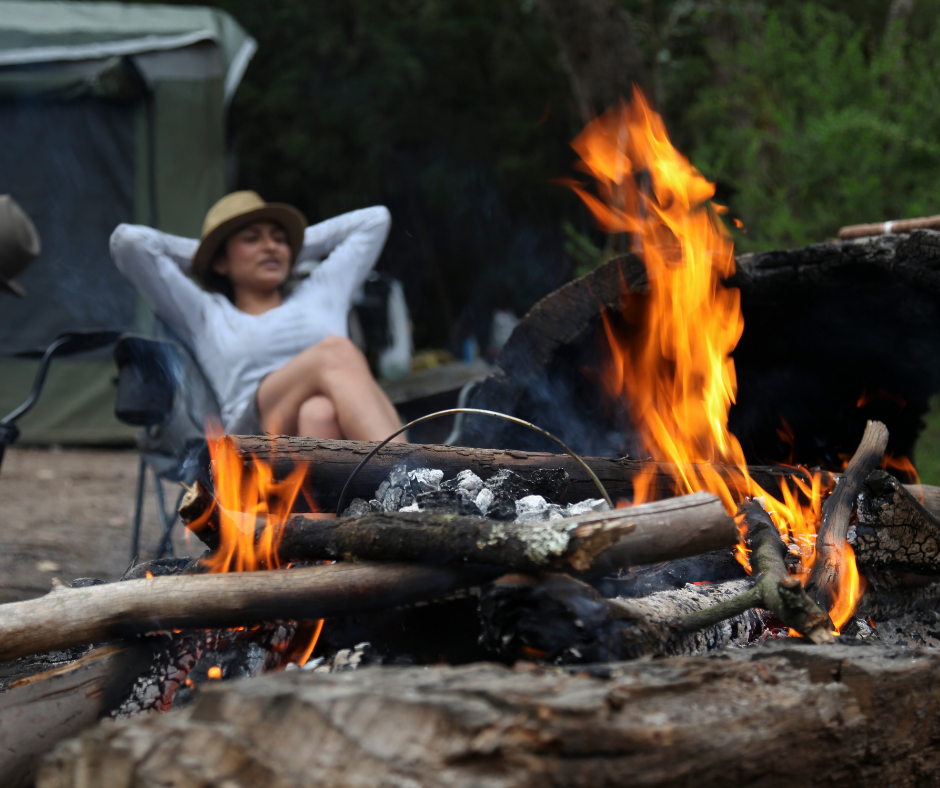
There is something different about cooking outside over charcoal.
Not complicated.
Not fancy.
Not rushed.
Just the sound of the fire settling in, the smell of smoke moving through the air, and the weight of a cast-iron pan sitting over real heat.
That is the part I keep coming back to.
You can cook the same steak, the same vegetables, or the same simple campground meal inside a kitchen, and it might turn out fine. But it will not feel the same. It will not have that little bit of smoke in the air. It will not have the breeze moving around you. It will not have that quiet moment when you are standing near the grill, watching the coals settle, waiting for the food to tell you it is ready.
That is where charcoal cooking earns its place.
At a campground, near the water, beside a picnic table, or at a quiet spot you found for the afternoon, cooking with charcoal slows everything down. You are not just turning on a burner. You are building heat. You are watching the fire. You are working with the moment instead of rushing past it.
And when you add cast iron to that, the whole thing gets even better.
Cast iron and charcoal belong together. The pan holds heat. The coals bring flavor. The food gets that seared edge, that smoky finish, that slightly imperfect outdoor character that makes a simple meal feel like something worth remembering.
This is not about becoming a pitmaster. It is not about having the most expensive gear or turning dinner into a production. Most of the time, all you really need is a small charcoal grill, a good cast-iron skillet, a few basic ingredients, and enough time to let the meal happen.
That is the beauty of campfire cooking and charcoal grilling at a campground. It does not require much. And maybe that is the point.
Start With the Fire, Not the Food
Good charcoal cooking starts before anything touches the pan.
That is one of the first things you notice when you cook outside enough. The food matters, of course, but the fire sets the pace.
Hardwood lump charcoal has a way of making the whole experience feel more natural. It burns hot, produces cleaner smoke, and delivers a wood-fired flavor that suits outdoor cooking. Briquettes can work too, especially if that is what you have, but lump charcoal has a more rustic feel to it. It feels less manufactured. More like something that belongs beside a campground table or near a quiet stretch of water.
Once the charcoal is lit, there is that little waiting period where nothing much is happening, and everything is happening at the same time.
The smoke is still sharp at first. The coals are catching. The flames are moving around. You are not cooking yet, but you are already in it.
That pause matters.
Inside a kitchen, heat is immediate. Outside, heat takes shape. You wait until the flames settle down and the charcoal starts to glow. You look for that ashed-over surface. You feel the heat with your hand from a safe distance. You start to understand when the fire is ready instead of just assuming it is.
That little bit of patience changes the meal.
It gives you time to notice where you are.
Maybe the sun is dropping behind the trees. Maybe you can hear people in the distance packing up for the day. Maybe there is water nearby, or wind moving through the palms, or the low sound of a campground settling into evening.
That is the part you do not get from an indoor burner.
Cast Iron Gives Charcoal Something to Work With
A grill grate is great for certain foods, but a cast-iron skillet gives charcoal a different kind of control.
It lets you cook food that might otherwise fall through the grate. It gives you a strong, even surface for searing. It holds heat when the fire shifts. And when that pan gets hot over charcoal, it can put a serious crust on steak, burgers, sausage, potatoes, peppers, onions, or just about anything that benefits from direct heat.
There is a reason cast-iron cooking outdoors has such a loyal following. It feels sturdy. It feels dependable. It does not need to be babied. You can set it over a charcoal grill, on a campfire grate, or near the edge of the heat and let it do what it does.
The pan becomes part of the place.
A cast-iron skillet over charcoal does not feel like a workaround. It feels like the right tool for the moment.
One of the simplest ways to use it is with a two-zone fire. Push most of the hot coals to one side of the grill and leave the other side cooler. That gives you one hot area for searing and one gentler area for finishing.
It is not complicated. It just gives you options.
Steak can hit the hot side first, get that crust, then move to the cooler side so it can finish without burning. Vegetables can sit away from the hottest coals and soften slowly. A cast-iron skillet can start over direct heat, then slide off to the side when things get moving too fast.
Outdoor cooking gets better when you stop fighting the fire and start working with it.

What Makes a Simple Campground Meal Stay With You?
Here is the question I keep coming back to:
Is it really the food we remember most, or is it the feeling around the food?
Because sometimes the meal is nothing complicated.
A steak in a cast-iron pan.
A few peppers and onions.
Corn on the cob.
Sausage over rice.
A burger cooked outside.
Potatoes crisped up in the same skillet.
Nothing about that needs to be impressive.

But when you cook it outside, over charcoal, with the fire in front of you and the day slowing down around you, it becomes something else.
That is what makes campfire cooking feel different. It is not only the smoke or the sear or the seasoning. It is the setting. It is the fact that you stepped away from the house, brought a few things with you, and made a real meal somewhere that felt worth going.
That is enough.
You do not need a perfect campsite. You do not need a full outdoor kitchen. You do not need a complicated recipe. Sometimes, a small grill, one cast-iron pan, and a cooler with the basics is plenty.
That kind of cooking reminds you how little it actually takes to enjoy yourself.
Charcoal Flavor Comes From Patience
The best charcoal flavor does not come from rushing.
It comes from letting the coals settle. Let the pan heat up. Letting the food sit long enough to develop color before you move it.
That is especially true with cast iron.
When steak hits a hot cast-iron skillet over charcoal, you can hear the difference right away. That deep sizzle tells you the pan is ready. The surface starts to brown. The edges tighten up. The smell changes from raw meat to something richer, something smoky and familiar.
The same thing happens with vegetables.
Bell peppers blister. Onions soften and char at the edges. Zucchini takes on color. Corn picks up smoke and sweetness. Even simple potatoes can turn into something better when they are cooked slowly in cast iron with a little oil, salt, and patience.
The fire does not need to be dramatic. In fact, most good charcoal cooking happens after the big flames are gone.
The glowing coals do the work.
That is part of why cooking with charcoal at a campground feels so grounded. You are not chasing high heat the whole time. You are managing it. You are listening. You are watching. You are making small adjustments.
Move the pan a little farther from the coals.
Turn the food once instead of five times.
Let the steak rest.
Let the vegetables finish slowly.
Let the fire calm down.
There is a rhythm to it.
And once you find that rhythm, cooking outdoors becomes less about performance and more about presence.
Simple Food Works Best Outside
Some meals just make sense over charcoal.
Steak is one of them. Burgers, too. Sausage, chicken thighs, pork chops, peppers, onions, corn, potatoes, and tortillas all seem to belong near fire.
That does not mean every outdoor meal needs to be heavy or meat-centered. It just means charcoal rewards simple ingredients.
You do not have to overthink it.
A good piece of meat, a little seasoning, a hot cast-iron pan, and a few vegetables can carry the whole meal. Add butter, garlic, herbs, or a finishing sauce if you want, but the foundation is already there.
The smoke does part of the work.
The cast iron does part of the work.
The setting does the rest.
That is why I like outdoor meals that do not ask too much from the person cooking. You should be able to look around. You should be able to hear the fire. You should be able to stand there for a minute and enjoy the fact that you are not inside.
A good campground meal should not feel like a project.
It should feel like a pause.
The Fire Becomes Part of the Memory
Long after the food is gone, you remember the fire.
You remember the smell of charcoal on your shirt. You remember the sound of the pan. You remember the way the light looked when the food was almost ready. You remember sitting down at the picnic table and taking that first bite while everything was still hot.
That is the part that sticks.
Not because the meal was perfect.
Not because the setup was impressive.
Not because anyone needed to explain every step.
It sticks because it felt real.
That is what draws people back to campfire cooking, cast-iron cooking, and simple meals outdoors. It gives you a version of life that feels slower and more direct. You bring the food. You build the heat. You cook the meal. You sit down and eat it.
There is not much more to it than that.
And honestly, that is what makes it good.
Cooking over charcoal at a campground is not just about maximizing flavor, even though it does that. It is about making room for a certain kind of experience. The kind where the food matters, but so does the air around it. The kind where a cast-iron skillet and a small charcoal grill can turn a quiet afternoon into something you actually remember.
That is why I keep coming back to it.
Because every time the coals glow, the pan heats up, and the food starts to sizzle, it feels like a small reminder.
You do not need much.
You just need a place worth stopping, a little fire, and something good in the pan.
There’s something about cooking outdoors that slows time down a little – the sound of the fire, the weight of the cast iron, the quiet that settles in when the only thing you’re focused on is the food in front of you. Every recipe here is one more stop along the way… one more meal cooked under open sky, one more reminder that simple ingredients and a good pan can turn any place into a kitchen.
If you’re following along on this journey, I’m glad you’re here. There’s a lot more to cook, a lot more to explore, and every dish adds a new chapter to where this project is heading.
See you at the next cookout.
Be Sure to SUBSCRIBE to our YouTube Channel
www.YouTube.com/@CookingOnTheRoad
Some of the links here are affiliate links. This means that if you click on the link and make a purchase, we will receive an affiliate commission at no additional cost to you.