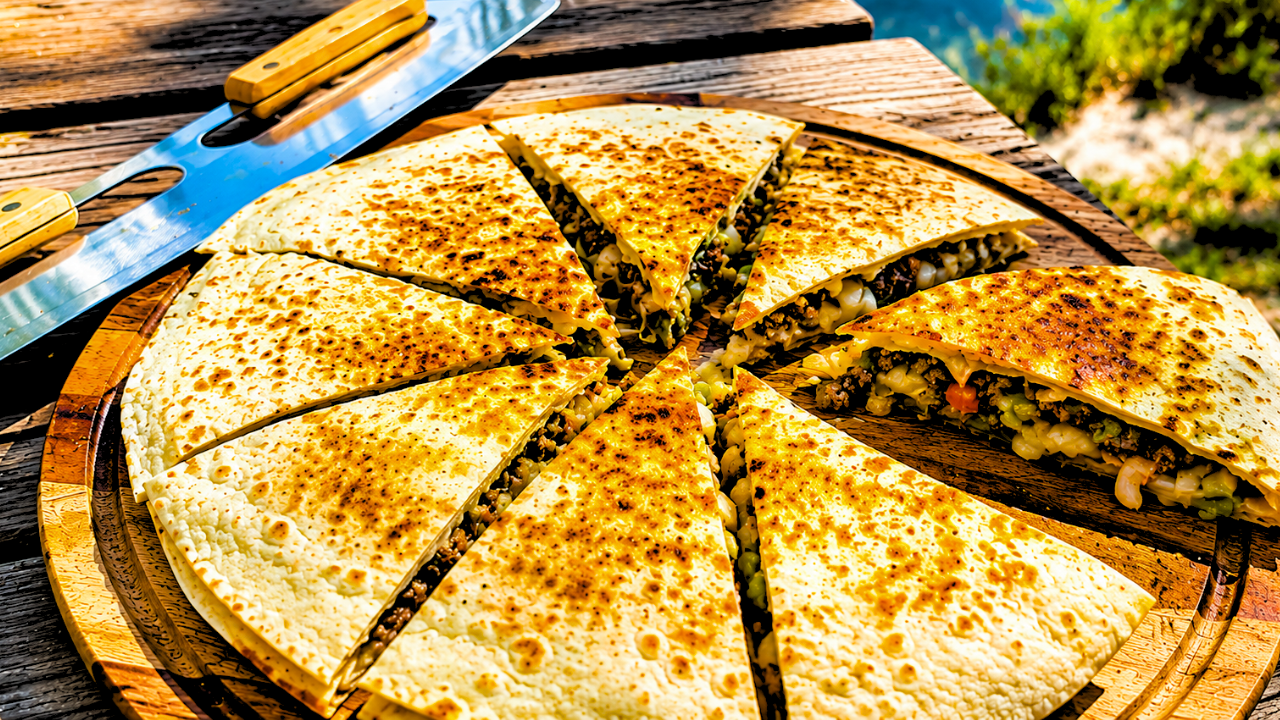
There is a certain kind of meal that does not need much.
A cast-iron skillet. A fire. Maybe a small grill grate. Something simple in the cooler. A little salt, a little smoke, a little patience. That is usually enough.
For some people, outdoor cooking is about gear, systems, recipes, and efficiency. They want the fastest way to make dinner at a campsite or the smartest way to organize a small RV kitchen. There is nothing wrong with that. But that is not really what draws me to cooking outside.
For me, and probably for a lot of people who understand this feeling, campfire cooking is less about solving a problem and more about returning to something familiar.
It is the sound of wood shifting in the fire. It is the weight of cast iron in your hand. It is standing near the water while the pan heats up. It is watching the light change while you wait for the first side of the steak, burger, sausage, or vegetables to sear.
That is why Cooking on the Road has always felt like the right name.
It is broad enough to include a lot of places and a lot of ways to cook. A campsite. A lake. A riverbank. A quiet corner near the coast. A simple road trip stop. A picnic table with a small grill. A pull-off where you spend the afternoon making something good before heading home.
But at the center of it, the idea is simple: get outside, slow down, and cook a real meal.
Not because you have to.
Because it feels better than being inside.
Why Campfire Cooking Still Matters
There are easier ways to cook.
That is the honest truth.
You can make dinner faster in a regular kitchen. You can control the heat better on a stove. You can avoid bugs, wind, smoke, ashes, uneven flames, and the occasional moment where something cooks faster than you expected.
But easier is not always the point.
Campfire cooking has a rhythm to it. You have to pay attention. You have to adjust. You have to wait for the fire to settle or the coals to get right. You have to learn the pan, the heat, and the moment.
That is part of the appeal.
A cast-iron skillet over fire does not feel rushed. It feels grounded. It asks you to stand there for a minute. It gives you something to do with your hands while the rest of the world gets quiet.
And when the food starts cooking, everything changes.
The smell of fat hitting hot iron. The sound of a burger sizzling. Smoke is moving through the air. Coffee sitting nearby. Maybe water is just a few feet away. Maybe trees. Maybe the end of a long road. Maybe just a few hours away from home, which is sometimes all you need.
That is the part that does not show up in a recipe card.
The food matters, but the moment around the food matters just as much.
Cast Iron Belongs Outside
Cast iron has always made sense outdoors.
It is heavy, simple, durable, and honest. It does not need to be delicate. It can sit on a grill grate, over coals, near a fire, or on a propane burner when fire is not allowed. It can cook breakfast, steak, burgers, sausage, potatoes, fish, vegetables, cornbread, beans, or whatever else makes sense for the day.
That is one of the reasons cast-iron cooking outdoors has such a strong pull. It does not feel like a gadget. It feels like something that has already proven itself.
You do not need a complicated setup to enjoy it.
A skillet, a lid, a spatula, a knife, a cutting board, a cooler, and something to cook over will get you pretty far. Some days that might be a campfire. Some days it might be charcoal. Some days it might be a small grill. Some days, because of the weather, rules, or location, it might be propane.
The fuel source can change.
The feeling can stay the same.
Because the real point is not whether the meal was cooked over perfect hardwood coals or on a small burner beside the truck. The point is that you left the house, went somewhere worth being, and cooked outside on purpose.
That alone changes the meal.
What Are We Really Looking For When We Cook Outside?
Here is the question I keep coming back to:
Are we really cooking outside because we need a better way to make food, or are we trying to permit ourselves to slow down for a while?
I think for a lot of people, it is the second one.
Most of us do not need another complicated hobby. We do not need more gear to organize, more steps to follow, or another thing that has to be optimized. We need something that feels simple again.
That might be why a basic cast-iron meal outdoors can feel better than something more elaborate cooked inside.
You are not multitasking. You are not standing in a kitchen half-looking at your phone. You are not rushing through dinner so you can move on to the next thing.
You are there.
You are watching the fire. You are listening to what is around you. You are paying attention to the pan. You are letting the day slow down because the food will not be rushed.
That is a different kind of meal.
And for some people, that is the whole reason to do it.
Propane, Charcoal, Campfire – They All Have a Place
There is a tendency in outdoor cooking to turn everything into a contest.
Campfire is more authentic. Charcoal tastes better. Propane is easier. Wood smoke gives more flavor. A grill is more practical. A skillet is more versatile.
All of that can be true depending on the day.
But real outdoor cooking is usually more flexible than that.
If you are at a campsite where open fire is allowed, there is nothing quite like cooking over wood. The fire becomes part of the meal. You build it, feed it, work around it, and eventually cook with it. The meal has a beginning long before the food hits the pan.
If you are using charcoal, there is a different rhythm. You wait for the coals, spread them out, find your hot and cooler zones, and let the smoke do some of the work. Burgers, sausage, steak, vegetables, and cast-iron sides all make sense there.
If you are using propane, that does not make the meal less real. Sometimes, propane is the right tool. It is clean, practical, consistent, and allowed in places where open flame or charcoal may not be. A cast-iron skillet on a propane burner can still deliver a great outdoor meal.
The important thing is not proving anything.
The important thing is cooking outside in a way that fits the place, the rules, the weather, and the kind of day you are trying to have.
Some meals are better over fire.
Some meals just need a hot pan and open sky.
The Best Outdoor Meals Are Usually Simple
There is something about outdoor cooking that rewards simplicity.
A steak does not need much when it is cooked in cast iron near the fire. A burger does not need to be complicated when the pan is hot, and the air smells like smoke. Sausage, peppers, onions, potatoes, eggs, fish, beans, and bread all seem to make more sense outside than they do under bright kitchen lights.
That does not mean the food has to be boring.
It means the food should match the moment.
Simple meals while camping or cooking outdoors tend to work because they let the setting do part of the work. The fire, the pan, the fresh air, the slower pace, and the hunger that comes from being outside all add something.
You do not need twenty ingredients to make that happen.
You need a good pan. Good heat. Enough time. And something worth cooking.
That is why cast-iron campfire cooking has stayed around. It is not trendy. It is not complicated. It does not require a perfect setup. It works because it is direct.
Heat. Iron. Food. Smoke. Time.
That is a pretty good formula.
Cooking on the Road Is About the Feeling of the Stop
The road part matters too.
Not in the sense that you have to be traveling full-time or living out of a camper. That is a different life. Some people love it, but that is not the only way to experience outdoor cooking.
Sometimes “on the road” just means leaving home for a few hours.
A state park. A boat ramp. A quiet trailhead. A lake. A coastal pull-off. A campground. A friend’s land. A simple day trip where the meal becomes the reason to stop for a while.
That kind of cooking has a different feel to it.
You are not performing. You are not trying to turn every meal into an event. You are just making the day a little better by cooking somewhere that feels worth being.
That is where Cooking on the Road fits.
It is not really about teaching someone how to cook. It is about showing a way to spend time. A version of the day that feels quieter, slower, and more intentional.
The meal is part of it.
The place is part of it.
The pause is part of it.
And sometimes that is enough.
You Do Not Need Much to Begin
One of the best parts about cooking outdoors is that the starting point can be very simple.
You do not need a built-out outdoor kitchen. You do not need a trailer full of gear. You do not need the perfect campsite. You do not need a full weekend planned.
You can start with one cast-iron skillet, one reliable heat source, one good meal idea, and one place where you would rather spend the afternoon than sit inside.
That might be near water. It might be under trees. It might be at a campsite. It might be at a park where grills are available. It might be somewhere close enough to home that it barely feels like a trip.
That still counts.
The point is not how far you went.
The point is that you went.
And once you do it a few times, you start to understand why the simple meals are often the ones you remember.
The burger was cooked outside after a quiet afternoon.
The steak in the cast iron skillet while the fire settled down.
The sausage and peppers on a windy day near the water.
The eggs in the morning, when the air was still cool.
None of it has to be complicated to matter.
The Road, the Fire, and the Pan
Cooking outdoors has a way of stripping things down.
You have the place you are standing. The food in front of you. The pan in your hand. The heat you are working with. That is about it.
And in a world where everything seems to move faster, that kind of simplicity starts to feel valuable.
Maybe that is why campfire cooking, cast-iron cooking outdoors, and simple meals while camping continue to pull people in. Not because they are the easiest way to cook, but because they remind us that a good meal does not have to be surrounded by much.
Sometimes the best kitchen is not a kitchen at all.
Sometimes it is a patch of ground, a small fire, a cast-iron skillet, and enough time to let the day settle.
That is the kind of cooking I keep coming back to.
And that is the kind of cooking Cooking on the Road is built around.
There’s something about cooking outdoors that slows time down a little – the sound of the fire, the weight of the cast iron, the quiet that settles in when the only thing you’re focused on is the food in front of you. Every recipe here is one more stop along the way… one more meal cooked under open sky, one more reminder that simple ingredients and a good pan can turn any place into a kitchen.
If you’re following along on this journey, I’m glad you’re here. There’s a lot more to cook, a lot more to explore, and every dish adds a new chapter to where this project is heading.
See you at the next cookout.
Be Sure to SUBSCRIBE to our YouTube Channel
www.YouTube.com/@CookingOnTheRoad
Some of the links here are affiliate links. This means that if you click on the link and make a purchase, we will receive an affiliate commission at no additional cost to you.